How high performing recruiters find revenue in a challenging market
By David Connolly / Firefish · 28/05/2026
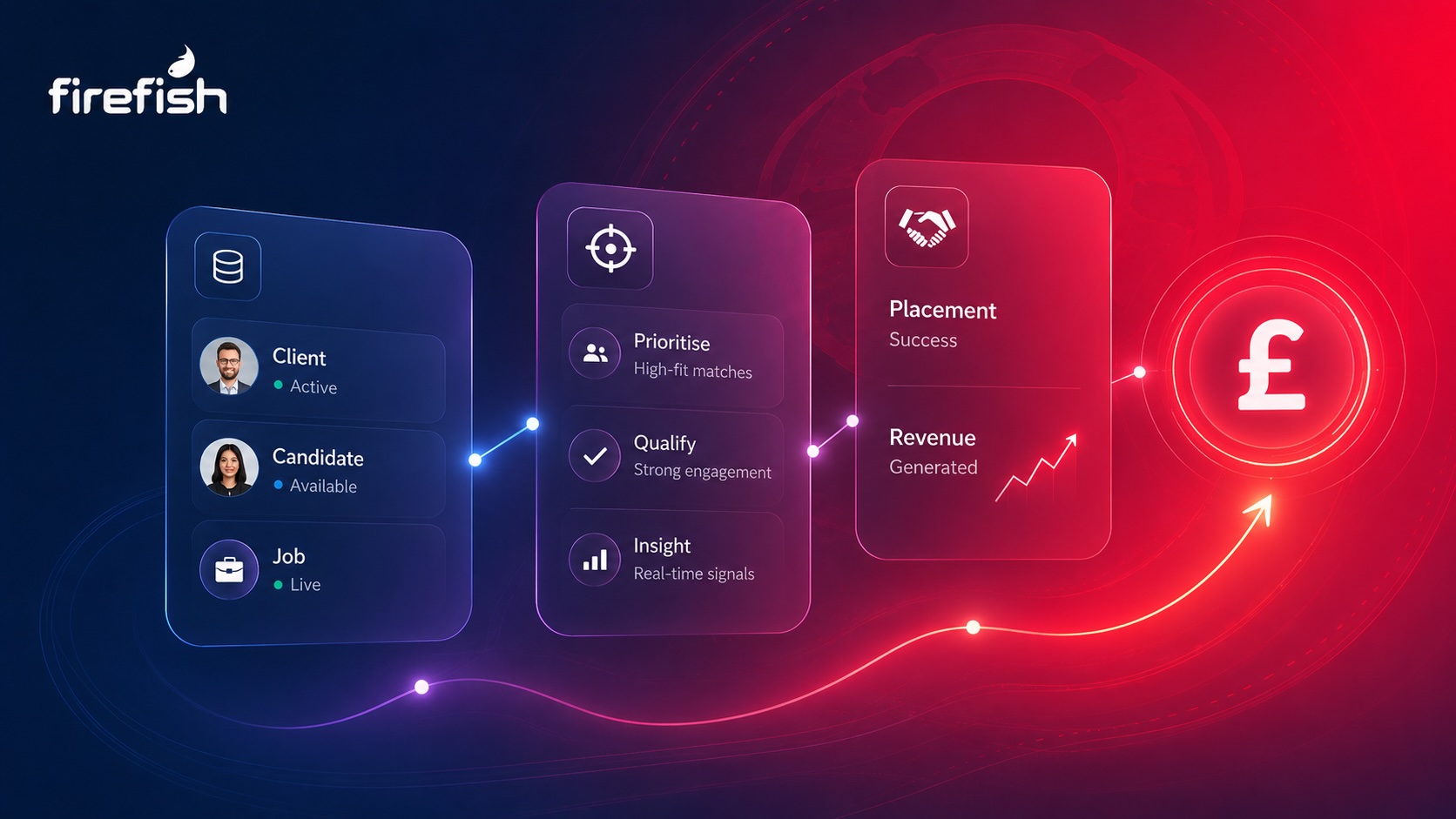
The recruiters who perform well in a tighter market usually have the same habit: they use what the business already knows before they go searching for something new.
Market conditions have tightened. Vacancies are harder won, clients are taking longer to commit and recruiters have less room to waste time on weak leads.
That does not mean the work dries up. It means judgement matters more.
When the market is busy, activity can cover a lot of cracks. A recruiter can chase a loose brief, send a few speculative CVs, make a handful of cold calls and still find enough movement to keep things ticking over.
In a tougher market, that approach starts to show its limits. The recruiters who keep finding revenue tend to be more selective about where they spend their time. They know which relationships are worth reopening, which clients are showing signs of intent, and which conversations have the best chance of becoming live work.
ONS estimates UK vacancies fell to 705,000 in February to April 2026. That gives recruiters a clear challenge: demand still exists, but the route to it is narrower. The best recruiters know how to find it faster.
1. They use their database to start better conversations
In a tighter market, the fastest route to revenue is often a conversation that has already happened.
Experienced recruiters know their CRM holds more than names, notes and old jobs. It shows who has hired before, which roles were painful to fill, which hiring managers went quiet, and which conversations stopped before they became live requirements.
That history gives a recruiter a reason to call with context.
A construction firm that hired a site manager six months ago may be planning the next phase of work. A manufacturer that struggled to find maintenance engineers last year may still have the same skills gap. A logistics business that paused hiring may now be reviewing headcount again.
These are warmer routes into business development than starting from scratch.
The best recruiters do their homework before they pick up the phone. They look at past roles, previous notes, hiring patterns, sector changes and client engagement. Then they shape the outreach around something real. That is a better conversation for the client too. It shows the recruiter understands the business, remembers the previous challenge and is not calling with a generic “just checking in”.
When client, candidate and sales information is spread across inboxes, spreadsheets and different systems, these clues are easy to miss. When recruiters can see that information clearly, they make better choices about who to call and what to say.
2. They spend their time where it is most likely to pay off
A busy desk can feel productive. That does not mean it is producing revenue.
High performers are ruthless about prioritisation. They do not treat every vacancy, client or candidate as equal. They look at the signals behind the opportunity before they commit too much time.
Is there a real hiring need? Is there budget? Do we know the decision maker? Has this client worked with us before? Do we understand what good looks like? Do we have candidates who fit the brief? Is the client moving with intent, or is this a vague conversation that could sit still for weeks?
Those questions matter because time is one of the most expensive things a recruiter has.
A weak brief can eat a whole morning. A poor fit client can drain days of sourcing. A role with no urgency can make a recruiter look busy while moving them no closer to a fee.
Better recruiters qualify earlier. They still build relationships, but they are honest about where their time should go first.
This is where a shared view of the client and candidate picture helps. If sales activity, client engagement, candidate readiness and previous hiring history are easy to see, recruiters can make better calls about what deserves attention.
3. They turn every placement into a business development opening
Average recruiters see a placement as the end of the process. The best recruiters see it as proof.
A successful placement shows they understood the brief, found the right person and helped the client solve a hiring problem. That gives them a stronger reason to keep the relationship moving.
Once the candidate starts, good recruiters stay close to the client. They ask how the hire is settling in, what the team learned from the process and where pressure still exists. Those conversations often reveal the next opening.
There may be another team with a similar problem. A hiring manager may introduce the recruiter to a colleague. A project may be coming up. A role may have taken longer to fill than expected because the business has a wider skills gap.
The candidate relationship matters too.
A placed candidate can give a recruiter a clearer view of the team, the culture, the hiring process and the wider market. They may know other people with similar skills. They may hear where teams are stretched. They may also become a future client contact as their career develops.
Handled well, both relationships support future business development. The client sees the recruiter as someone who understands their hiring problems beyond one vacancy. The candidate sees the recruiter as someone who stays interested after the start date.
Better activity wins
A challenging market does not reward the recruiter who simply does the most. It rewards the recruiter who knows where to look, who to speak to and when to act.
More calls still matter. So do follow ups, candidate conversations and client meetings. But the best results come when that activity is pointed at the right opportunities.
The recruiters who perform well in a tighter market usually have the same habit: they use what the business already knows before they go searching for something new.
David Connolly / Firefish
The recruitment CRM that turns data into revenue. Firefish is recruitment CRM software for growing agencies that want to manage permanent, temporary and contract recruitment in one connected platform. Bring your candidates, clients, jobs, workflows, marketing, AI agents and reporting together — so recruiters spend less time on admin and more time making placements.
*